 Rated Excellent
 Expert Advice and Aftersales
 Free UK Delivery*
Air Compressor Buyer’s Guide: How to Choose the Right Compressor For You
Posted by Nicola Martin - Hyundai Power Products on 18th Sep 2025

Buying an air compressor always sounds straightforward, until you actually start looking. Suddenly you’re faced with tank sizes, CFM figures, wattage, noise levels, and a lot of advice that boils down to “buy the biggest one you can afford.”
That’s usually how people end up with compressors that are either working flat-out all the time, or sitting there taking up space they never really needed.
This guide is here to help you choose an air compressor that suits how you’ll actually use it, without under-buying or paying for capacity you won’t touch.
What will you realistically use the air compressor for?
Before looking at models, it helps to be honest about how compressed air fits into your day-to-day work.
Most buyers fall into one or more of these groups:
Home garage and DIY use
Car maintenance and light workshop jobs
Spray painting or airbrushing
Small business or workshop environments
The more often you rely on compressed air, and the longer tools need to run, the more airflow and tank capacity start to matter.
Hyundai air compressors matched to your use
Below is the full Hyundai air compressor range, mapped to how people actually use them rather than headline numbers. This is usually the quickest way to see where you fit. | |



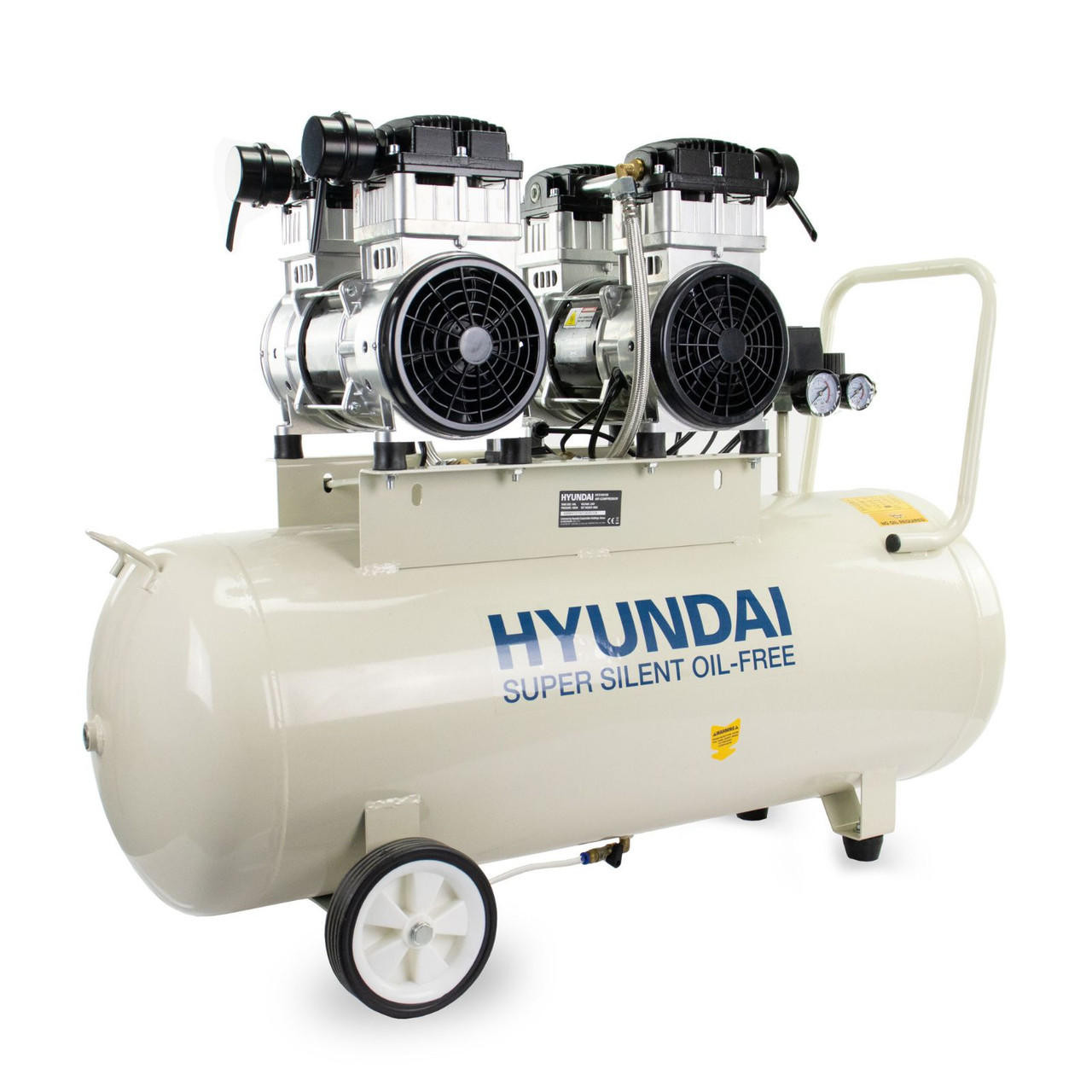
Understanding tank size (and why it matters)
Tank size affects how long you can use air tools before the compressor needs to recharge.
Smaller tanks take up less space, are easier to move, and suit short, stop-start jobs. Larger tanks provide steadier airflow, reduce cycling, and cope better with tools that need air for longer periods.
For occasional tasks, smaller tanks work well. For regular or extended use, stepping up avoids frustration and unnecessary strain on the compressor.
CFM vs PSI: what actually makes a difference?
PSI tends to grab attention, but CFM is usually the more important figure.
PSI is pressure
- CFM is airflow
Most air tools need a steady supply of air rather than extreme pressure. If the compressor can’t deliver enough airflow, tools feel weak or inconsistent, even if the PSI rating looks impressive on paper.
As a general rule:
Light, occasional tool use needs modest airflow
Continuous tools, sanding or spray painting benefit from higher airflow
Oil-free compressors: what that means in practice
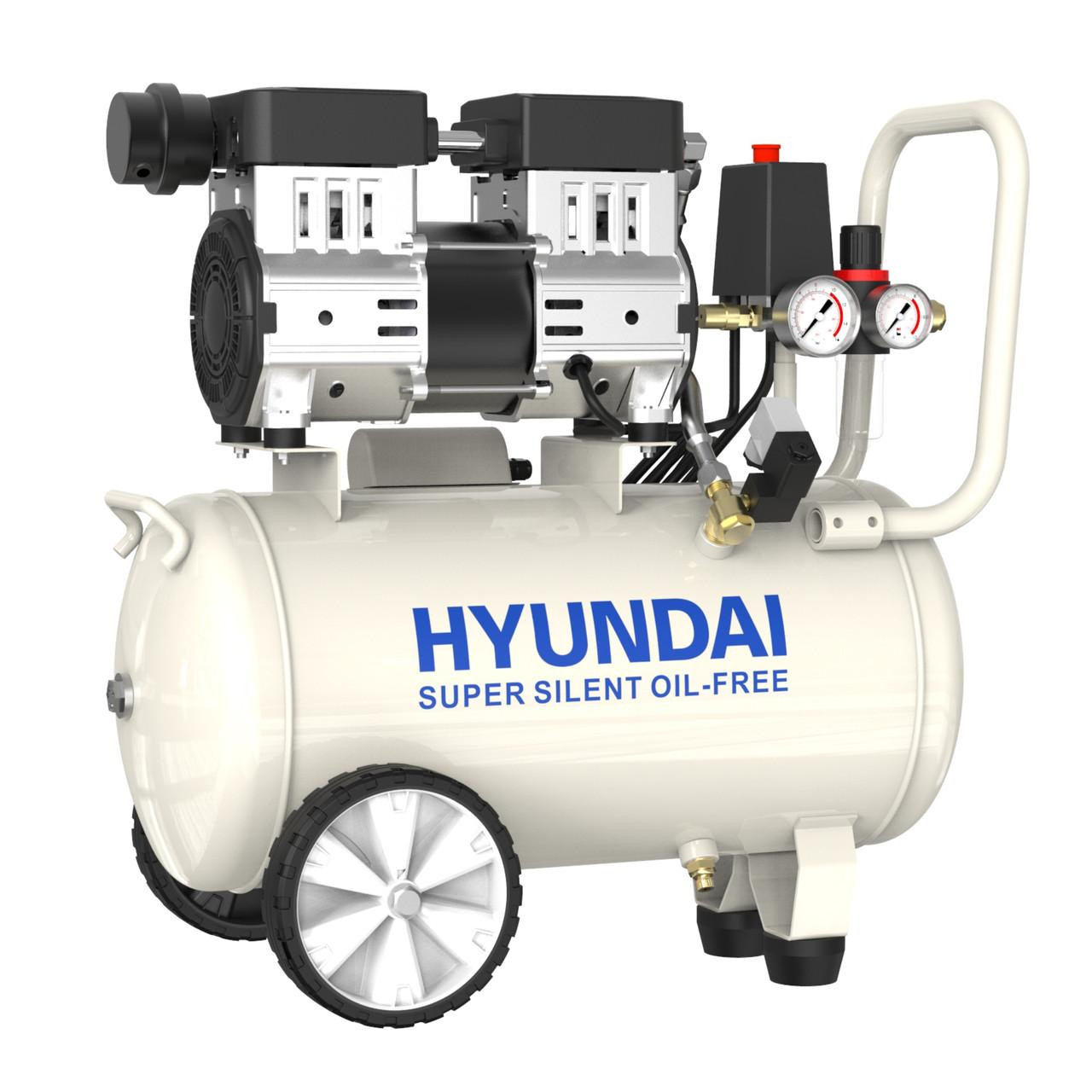
All compressors in the Hyundai range here are oil-free and direct-drive.
That means:
Lower maintenance
Cleaner operation
Quieter running
Easier ownership for home and workshop users
Oil-free designs suit garages, workshops and small businesses where simplicity and noise control matter more than continuous industrial duty cycles.
Noise: the factor most people underestimate
Noise is rarely top of the list when buying, until the compressor is switched on.
If the compressor lives in a home garage, shared space or attached building, quieter operation makes a big difference to how often it actually gets used.
Low-noise compressors are especially valuable where work happens regularly but the environment isn’t industrial.

Buying too small vs buying too big
This is where most mistakes happen.
Buying too small leads to tools struggling, constant cycling and growing frustration. Buying too big costs more, takes up space and offers capacity that never really gets used.
The aim isn’t maximum output, it’s comfortable headroom for how you actually work.
Choosing from the Hyundai air compressor range
The Hyundai air compressor range is designed to cover everything from light home use through to demanding workshop environments, all with oil-free, low-noise operation.
Once you’re clear on how often you’ll use compressed air and what tools you’ll run, choosing the right model becomes much simpler.
For a deeper, side-by-side breakdown of specifications and differences;
Hyundai Air Compressors Explained: Models, Differences, and How to Choose the Right One.
A good air compressor doesn’t draw attention to itself. It just works, keeps tools running, and stays out of the way, which is exactly what most people want.
FREQUENTLY ASKED QUESTIONS
That depends on what you’ll use it for most often.
For tyre inflation, blow-down jobs and light DIY, a small tank is usually enough. For regular car maintenance or air tools, a mid-sized compressor makes life easier. If tools will run for longer periods or more often, stepping up to a larger tank helps maintain consistent airflow and reduces cycling.
The goal isn’t the biggest compressor, it’s one that can comfortably keep up with your work.
For most home garages, workshops and small businesses, yes.
Oil-free compressors are lower maintenance, cleaner to run and generally quieter. They’re well suited to intermittent and regular use where simplicity matters. Heavier industrial environments may still favour oil-lubricated systems, but for typical garage and workshop use, oil-free models are a practical choice.
CFM is usually more important.
PSI is pressure, while CFM is the amount of air the compressor can deliver. Most air tools need a steady supply of air rather than extreme pressure. If CFM is too low, tools will feel weak or inconsistent, even if the PSI rating looks high.
If noise matters in your space, absolutely.
Quiet or low-noise compressors are especially useful in home garages, shared workshops or buildings attached to living areas. They make it easier to work regularly without disruption. The trade-off is usually size or outright output, so it’s about balancing comfort with performance.
Yes, air compressors are commonly used for tyre inflation, cleaning components and running air tools.
For occasional car work, a mid-sized compressor is usually sufficient. If you’re working on vehicles regularly or using impact tools, a larger tank helps provide smoother operation and less waiting for pressure to recover.
They can be, but the requirements differ.
Airbrushing needs steady pressure rather than large volumes of air, so smaller compressors often work well. Spray painting needs consistent airflow over time, which usually means a larger tank and higher airflow to avoid pressure drops mid-job.
Oil-free compressors are generally quieter than traditional oil-lubricated designs, but noise levels still vary by size and output.
Smaller compressors tend to be quieter overall. Larger units may produce more noise but still operate at lower levels than older-style workshop compressors. Checking noise ratings is important if sound is a concern.
With proper use, an air compressor can last many years.
Lifespan depends on how hard it’s worked, how often it runs and whether it’s being pushed beyond its intended use. Choosing a compressor with enough headroom for your workload helps reduce wear and extend its working life.
Sign-up to our newsletters for more top-tips, gardening guides and offers for Hyundai Power Equipment.
We hope you’ve found these tips helpful and remember: if you need any further advice, our team of experts is on-hand to help you, so just get in touch!
If you have any questions please visit www.hyundaisupport.co.uk. For expert advice or any questions you may have, you can give us a call on 01646 687880, fill out the contact form here or drop us a message on any of our social media pages - Facebook, Instagram or X.com