 Rated Excellent
 Expert Advice and Aftersales
 Free UK Delivery*
Getting Your Garden Ready for Spring: What to Tackle First
Posted by Nicola Martin - Hyundai Power Products on 18th Sep 2025

One minute the garden’s been ignored all winter, the next you’re looking at green slime on the patio, branches that didn’t survive the storms, and a lawn that feels more sponge than grass. It’s tempting to dive straight into planting or mowing, but that usually just adds frustration.
The easiest way to get a garden back under control is to deal with it in the same order winter messed it up: clean first, cut back second, then prepare for growth.
Start with the mess winter leaves behind
Before anything else, it’s worth clearing away the dirt and grime that’s built up over the colder months. Patios, paths, decking, and driveways tend to collect algae and moss over winter, especially after long spells of rain.
Aside from looking rough, those surfaces can be slippery and awkward to work around, so getting them clean early makes everything else easier.
For most gardens, an electric pressure washer is more than capable of handling this. Patios, paving slabs, fences, and garden furniture don’t need industrial power, just consistent pressure and the right attachments. A mid-range electric model is usually quicker and far less hassle than dragging out a petrol machine for occasional cleaning.
If you’ve got a larger driveway or heavy build-up from years of neglect, a higher-powered washer will speed things up, but there’s no need to overcomplicate it for typical spring cleaning.
The aim here isn’t perfection. It’s removing the slippery layer and seeing what condition everything’s actually in.

Deal with overgrowth and storm damage next
Once everything’s clean enough to assess properly, the next jobs tend to make themselves obvious. Fallen branches, overgrown shrubs, hedges that quietly doubled in size over winter.
This is where many people underestimate how much easier the job becomes with the right cutting tool.
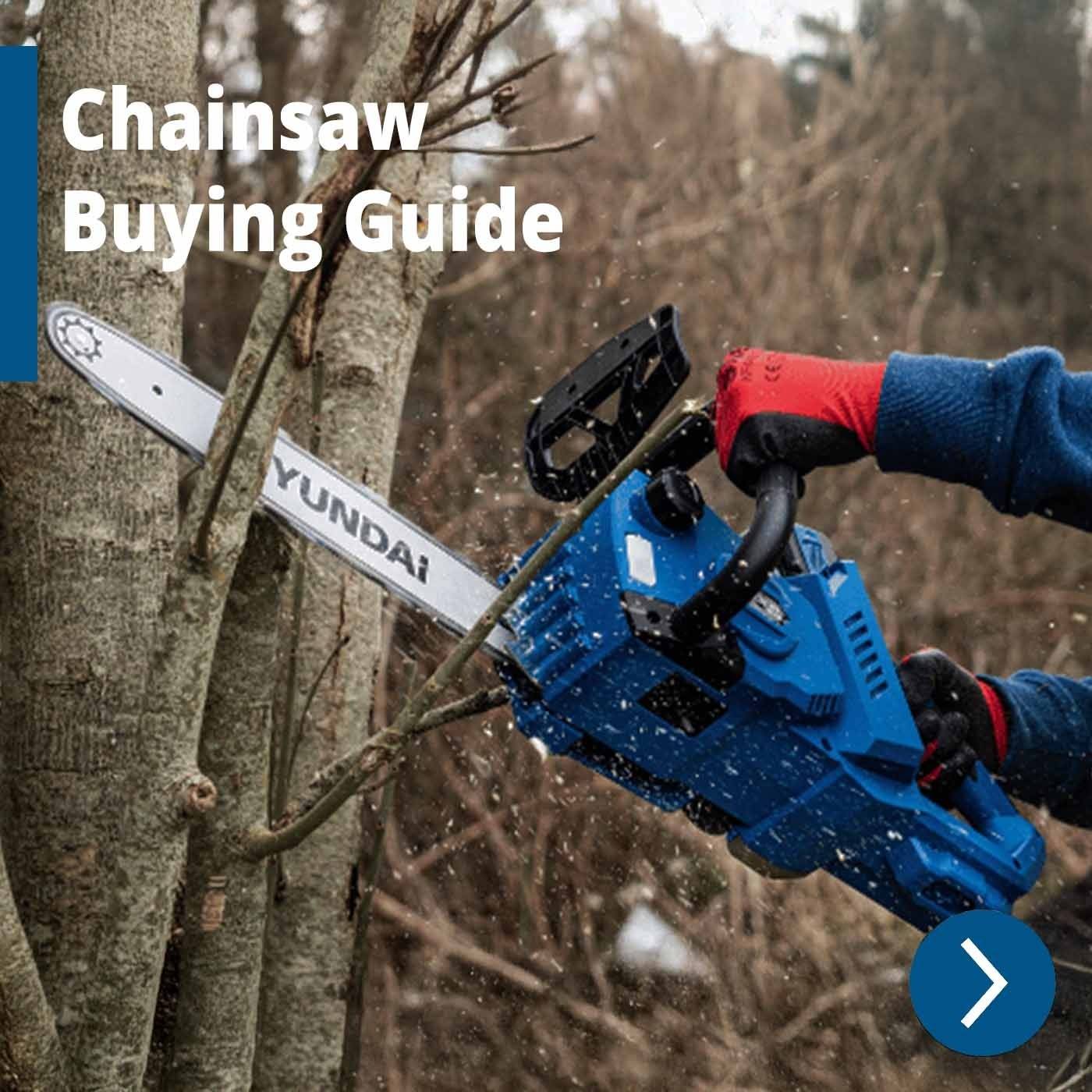
For most home gardens, electric or battery chainsaws are ideal for pruning, cutting back storm damage, and tidying up trees and hedges.
They’re lighter, quieter and far more manageable than full petrol saws, which makes them far less intimidating for general garden use.
Petrol chainsaws still have their place, particularly for thicker timber or heavier workloads, but most homeowners don’t need that level of power for spring tidy-ups. If you’re mainly cutting branches, trimming back growth or chopping logs for a fire pit, a lighter chainsaw will do the job comfortably.
If a chainsaw feels like overkill, it’s often because people picture forestry work. Garden pruning is a very different task.

Look at the lawn last, not first
Lawns take a battering over winter. Compacted soil, moss, and dead grass build up quietly while growth slows to a crawl.
If your lawn feels spongy underfoot or looks patchy, scarifying can make a big difference. Removing moss and thatch allows air, water, and nutrients back into the soil, giving grass a better chance once temperatures rise.
Not every lawn needs scarifying every year, but if moss has taken over, doing it early in spring gives the best results. It’s not the prettiest process, but it’s one of the most effective resets you can give a tired lawn.
Choose tools that fit your garden
Spring is when people tend to overbuy. Bigger machines look impressive, but they also take up more space, make more noise, and often do far more than a typical garden actually needs.
A few simple considerations help keep things sensible. Smaller gardens usually benefit most from electric tools because they’re quieter, lighter and easier to store. Larger gardens or heavier jobs justify more power, but only if you’ll genuinely use it. If a tool comes out a handful of times a year, simplicity matters more than raw output. If it’s used regularly, reliability becomes the priority.
Buying for how you actually work, rather than how you imagine you might work one day, is what stops tools being abandoned by May.
A practical order that keeps things manageable


What do you do next if you’re choosing tools?
Once you know which jobs you’re tackling, choosing the right tool becomes far less confusing.
If you’re unsure about power levels, noise or whether electric or petrol is the better fit, we go into that properly in guides like Which Pressure Washer Do I Need for My Garden? and Choosing the Right Chainsaw for Garden Work. They’re designed to help you match tools to real jobs, not just specs on a page.
You can also browse the full Hyundai range of pressure washers, chainsaws, and garden equipment, all built with UK gardens and conditions in mind.
FREQUENTLY ASKED QUESTIONS
Late winter to early spring is ideal, once the worst frosts have passed. Clearing debris early makes it easier for plants and lawns to recover as temperatures rise.
You don’t need one, but it makes cleaning patios, paths and garden furniture far quicker and more effective than scrubbing by hand, especially after winter algae build-up.
For most home gardens, yes. Electric and battery chainsaws are well suited to pruning, cutting back branches and general tidying. Petrol chainsaws are better reserved for heavier or more frequent cutting.
Not necessarily. Scarifying is useful if moss or thatch has built up, but healthy lawns don’t need it every year. It’s best used when the lawn feels spongy or looks patchy.
Usually not. Larger, more powerful tools cost more, take up space and are often unnecessary for smaller gardens. Matching the tool to the size of the job makes maintenance easier, not harder.
Sign-up to our newsletters for more top-tips, gardening guides and offers for Hyundai Power Equipment.
We hope you’ve found these tips helpful and remember: if you need any further advice, our team of experts is on-hand to help you, so just get in touch!
If you have any questions please visit www.hyundaisupport.co.uk. For expert advice or any questions you may have, you can give us a call on 01646 687880, fill out the contact form here or drop us a message on any of our social media pages - Facebook, Instagram or X.com