
 Rated Excellent
 Expert Advice and Aftersales
 Free UK Delivery*
Hyundai Water Pump Buying Guide
Posted by Max Letek on 19th Dec 2025
HYUNDAI Water Pump Buying Guide

Choosing the right water pump ensures you can move water quickly, safely and efficiently, whether you’re draining a flooded basement, watering crops, emptying a pond, or managing dirty water on a worksite. This Hyundai Water Pump Buying Guide explains pump types, power options, water quality categories, how to match a water pump to your exact requirements and how to find the best Hyundai water pump for your home, garden, farm, or worksite.
What type of water pump do I need?
Before selecting a pump, ask:
Where will the pump be used? (Inside a building? Outdoor? Flood zone? Construction site?)
How much water must be moved (volume)?
How far / high does it need to go (head / lift)?
What water quality is involved? (Clean water, dirty water with solids, sludge, waste water, chemical-laden water)
Hyundai offers models across all these categories: clean-water, dirty/trash, and chemical pumps. For flooding, you’ll typically want a dirty water flood pump with a high flow rate so you can move large volumes of water quickly and safely away from the property.
Water Type | Key Considerations | Hyundai Example Models |
Clean / fresh water | No abrasive solids; simpler housings | HYSP250CW 250 W submersible for clean water |
Dirty / Trash / Solids | Needs more robust impeller, larger discharge, wear resistance | HYSP550CD submersible dirty/clean water pump |
Heavy-duty / Construction / Sludge | Strong materials, corrosion resistance, high head | DHYT80E open-frame diesel trash water pump |
Flow rate (capacity): The volume of water the pump can move per minute (or per hour), typically in litres per minute (L/min) or gallons per minute (GPM).
What is Head in Water Pumps?
Head / total head: A measure of the maximum “height” (vertical lift plus friction losses) the pump can push water to, usually in metres.
What is suction lift in water pumps?
Suction lift (or lift): The vertical distance the pump must draw water up from its source (e.g. well bottom to pump).
When specifying a pump, you need to ensure:
Its maximum head exceeds the total vertical and friction losses in your system.
Its flow rate meets or exceeds your required throughput under that head.
Its suction lift is compatible with your source depth.
For example, the HYWP4300X petrol clean water pump has a total head of 35 m, 8 m lift, and 250 L/min flow rate.
As a rule of thumb, if you need to pump water up around 10 metres from a basement to an outside drain, choose a pump with a maximum head comfortably above that (for example, 20–25 m) to allow for friction losses in hoses and fittings.
Petrol vs Diesel vs Electric
Each pump type has pros and cons. Hyundai offers all three.
Type | Advantages | Considerations | Hyundai Modelsand Use Cases |
Petrol (engine-driven) | Independent of electricity; portable; good for remote or outdoor use | Requires fuel, some maintenance (engine), some noise, exhaust | HY80 3″ petrol clean water pump with 28 m head, 7 m lift |
Diesel (engine-driven) | More fuel-efficient in heavy use, robust | Can be heavier, more complex, exhaust | DHYT80E open-frame diesel trash pump 25 m head, 6 m lift |
Electric/Submersible | Quiet, simpler, less maintenance, plug-in | Requires electric power, cable management, limited by lift | HYSP250CW, HYSP550CD, HYSP1100CD |
Submersible electric water pumps are designed to be lowered into the water body (well, sump, tank). They are efficient for vertical lifts and removing water from basins. Examples: HYSP550CD (dirty/clean) and HYSP1100CD (higher capacity)
Material, Durability and Components
A water pump will last longer and perform reliably if built from robust materials and with quality components. Here’s what to check:
Pump housing & impeller material - cast iron, stainless steel, or heavy-duty plastics depending on water type.
Shaft seals / mechanical seals - to prevent leakage, especially in dirty or abrasive water.
Bearings / support - to resist vibration, wear, loads.
Frame & protection (for open frame models) - for rugged outdoor use.
Ease of maintenance - accessibility for cleaning, servicing, replacing parts.
Matching Pump to your Requirements: A Step-by-Step
Here’s a simplified approach to choosing your pump:
Calculate your required flow (e.g. litres per minute or per hour)
Estimate total head (vertical lift + losses in pipes, fittings, friction)
Choose a pump whose performance curve meets the flow at or
above your required headDecide on power type (petrol, diesel, electric) depending on site constraints
Pick a model with suitable build & durability for your water type
Check connection size / port diameters to match your hoses/piping
Consider ease of maintenance, spares availability, warranty

Best Hyundai Water Pump for Common Jobs
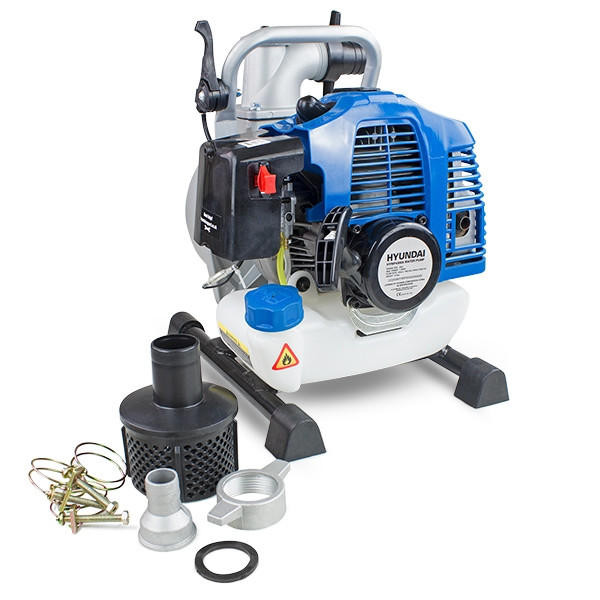
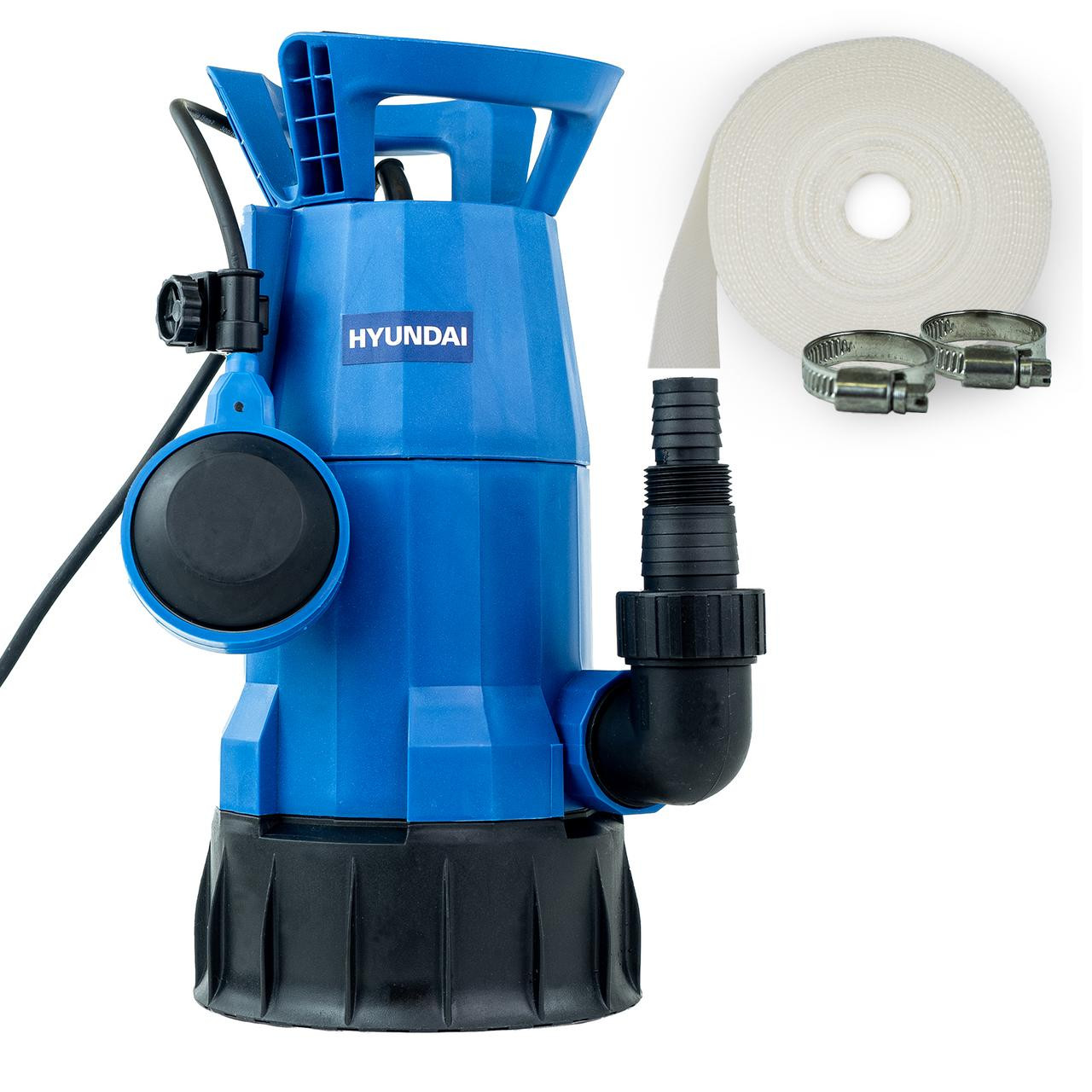
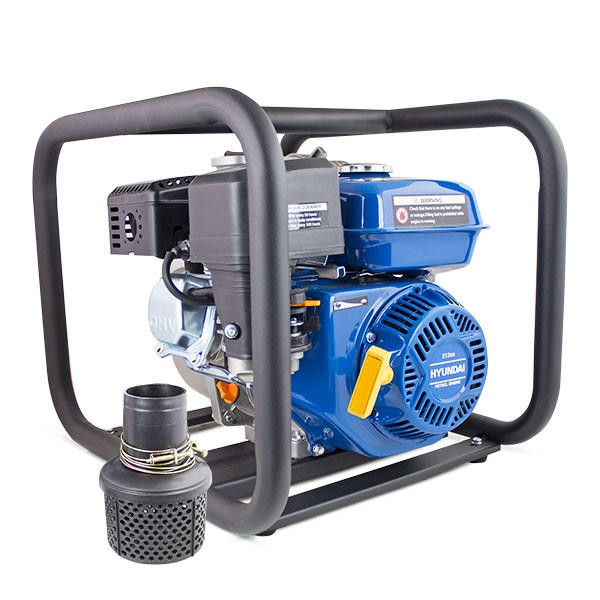
Petrol clean water pump, 35 m head, 8 m lift, 250 L/min. Ideal for domestic drainage, garden, simple clean water transfer. Best for home use, domestic drainage, and clean water transfers | Electric submersible 1 – 1½″ hose, 6 m lift. Useful for small sumps, basements. Best for small basements, sumps, and tanks |
Can handle slightly dirty water, 7 m lift. Useful for pond or light site use. Best for ponds and slightly dirty water. | Higher capacity, for heavier duty submersible usage. Best for heavier-duty dirty water jobs |
Open-frame diesel trash pump, 25 m head, 6 m lift. Suitable for heavy duty, debris-laden water applications. Best for heavy-duty, debris-laden flood and site water. | Mid-range petrol clean water pump with 28 m head, good for larger domestic / agricultural water movement. Best for farm water and garden irrigations |



Installation and Operational Tips
Always prime the pump (fill with water) before starting (unless it’s self-priming).
Ensure air-tight suction lines; leaks reduce performance.
Keep inlet clear of debris, silt and obstructions.
Use appropriate hoses / pipes sized for the pump’s inlet/outlet to minimise friction losses.
Monitor engine pumps’ fuel, oil, cooling (if applicable).
For submersibles, ensure cable safety, avoid kinking, and protect against abrasion.
Don’t run dry - pump failure is likely if no water is inside.
Common Water Pumps, Pitfalls & How to Avoid Them
Under-sizing the pump - choosing a pump whose head or flow is insufficient
Ignoring friction losses in piping & bends
Running a pump dry - critical cause of failure
Using the wrong pump for dirty water - solids / debris will damage seals and impellers
Poor maintenance / inadequate servicing
After-Sales, Parts and Support
One of the benefits of choosing Hyundai Power Products is access to spare parts, servicing, and technical support via your UK network. With Hyundai you can rely on parts availability and warranty support.
Hyundai offers a comprehensive range of clean water, dirty/trash and submersible electric water pumps designed for domestic, agricultural, commercial and industrial jobs. By understanding water quality, required flow rate, total head and power type, you can confidently choose the right model for long-lasting performance.
With Hyundai’s UK-based parts, warranty and support, you can rely on dependable pumping whenever you need it.
Need more help? Contact a Hyundai Water Pump Expert now.
Frequently Asked Questions
Most Hyundai pumps can run for several hours at a time as long as they’re correctly primed, cooled, and supplied with fuel or power. For long jobs, take regular breaks to check oil, temperature, filters, and fuel levels, and never run the pump dry.
For flooding, choose a dirty water flood pump with a high flow rate (hundreds of litres per minute) and a large hose size (2–3") so you can clear water quickly.